Friday, September 30, 2011

BURIAL GROUND "DAY OF THE DEAD" (Worthless Recordings)

At its most intense, fear becomes a constant. Infinite, without recession, an unfocused stumble to the nearest exit, a heady mixture of adrenalin, sweat, tension, and pure white-heat terror. Few film cycles have captured this idea of non-escapism as well as George Romero's zombie mythology, and now Burial Ground has taken those films as inspiration for a series of HNW recordings that reflect the blood-soaked violence of the genre while highlighting the total blind fear and caustic sense of looming death felt in the celluloid depths.
I honestly can't think of a better idea. Film and cinema are closely tied, and this pairing works so brilliantly that i feel i barely need to describe its intricacies. Romero's films are about fright incarnate, the point at which the human spirit is driven to think only of survival. Every option save for one is removed; the world as we know it recedes and becomes something totally alien and hostile, our only choice to map out its coordinates in blood splatter and the resounding crash of shotgun shells booming in the air. It's an aura of suffocation oft imitated but never equaled, a depiction of humankind as potential provender, as pure an evocation of will as has ever been put to screen.
Burial Ground only seeks to echo this notion. "Day of the Dead" is a total immersion bath, a scathing blast of blackened crumbling wall electronics that reduces the world to the very narrow point of what's truly immediate, an illustration of a moment in which you're forced to contemplate the reality of your own messy end and decide whether to take action or submit to evisceration and memory. It's done with an animal intensity, the tar-shrieks of the wall forever rolling forward, threatening all that stand in its inevitable forward path. There is no ignorance; there is only the choice to resist by the bloodiest means possible. Compassion has to be erased and primal aggression must be embraced, the very human essences within have to be silenced and compartmentalized in order to continue. This recording serves as a question to each listener personally: could you? The cost is a willingness to accept forever grey, an agreement to exist in this carved out endtime of viscera and shattered brains, to hold hands with violence and the regressive instincts of all living things. Kill or be killed, black and white, living and dead. Burial Ground's world is one of complete and total extremes, with on middle ground to gravitate towards. Neutrality becomes an impossibility, or maybe an actuality, depending on how you view death and survival. The philosophical complexities suggested by this recording (and its film source) are staggering and cavernous.
Across a span of an hour, the wall becomes a force of sonic nullification, a totem of living electricity and crumbling rocks that seem to fall out of the invisible depths of the sky. There's no peace, no respite; the only tangible demonstration of emotion comes at the beginning of the piece, where a bit of the film's haunting synth figures give way to utter annihilation. That soft moment of frightened contemplation, that doorway to the bloodbath reality of personal minimalization and cosmic inconsequentiality, becomes almost more anxiety-ridden than the impenetrable black cloud vomit that follows. Like a bullet separating brain from skull, ending all remnants of intellect and therefore humanity, the wall slumbers over everything in its path. Everything before it is consumed, everything is sacrificed. The notion of strength in adversity is made to stand before the cold obviousness of true obstinancy, the eye of endlessness cast wide. All figures are painted in shadow before that gazing mass; all are cast beneath the choking dirt of what must be. The will is a very human concept made to hold against that which seems insurmountable; Romero and Burial Ground both understand that will can be broken, collapsed, immolated. "Day of the Dead" is that break; reality is hopeless. Eat the gun or feel your flesh flayed and torn away from you. Highly recommended.

Friday, September 2, 2011

ACID MOTHERS TEMPLE "LIVE IN OCCIDENT" (Essence Music)

Another gorgeous re-release from Essence Music, this time rescuing the very first Acid Mothers Temple live album from nostalgic oblivion and illuminating just how little this group has changed in near two decade of existence. Appearing super early in their discography, "Live in Occident" shows AMT doing what they do best-flying off into noise-streaked tangents of head-nodding psychedelic excess, with little regard for touring behind an album or even having some sort of "songs" to play (aside from the quintessential AMT track "Pink Lady Lemonade," which does appear here, maybe for the first time); the resulting record is simply another demonstration of AMT's live abandon, slightly more woolly than usual but nothing out of the ordinary.
This is the sort of record that makes up 80% of the merch booth at an AMT live show. There's nothing you haven't heard before but you have to fucking get it because it just might be something you haven't heard before. Across hundreds of releases the quality of these live documents has remained astoundingly high-there are few, if any, live albums by AMT that i would consider weak or tepid. Some are more aggressive than others, but it all depends on the band's mood at any given recorded performance. Having seen the band umpteen times live, it's easy to tell when they're in the zone and when they're simply going through the motions. Both make for fine concerts, but one can be revelatory to the point of transcendence. The other is just another exploration of outer space's deepest wastes.
"Live in Occident" is a little more the latter. As a live record it's quite visceral, maybe one of the more in the red performances from the band (more than likely still carrying vestiges of the PSF aesthetic shown on their first few records) ranking near the top with the "Hotter Than Inferno Live in Sapporo 2008" release from the AMT Cosmic Inferno unit. The drums are thunderous, the bass a gooping wobble, the keyboards and synthesizers all bleeding into the ultimate saturnian howl and whine. Kawabata's guitar screams and skronks, shredding itself into bleeding chunks of postmortem metallized obfuscation. The folk leanings are completely absent here (to a certain dismay; what's an AMT show without "La Novia"?), the record given over almost entirely to fuzz-bomb distortion and effect-heavy mind fucking; this was AMT out for blood. The only real respite comes in the aforementioned slog through "Pink Lady Lemonade," obviously in the infant stages here (i've witnessed performances where the band riffs on it for near an hour) and plagued by delay-pedal problems and a general lack of direction. There's no huge guitar solo, no real growth across the track, and very little of the open sense of wandering that seems to accompany more modern approaches to the live centerpiece. When those ringing guitar lines come in, you're ready for a journey-here the road dead-ends after a mere seven minutes, consumed by the roar of decimation and the band's apparent need to melt faces at 1000 mph.
"Pink Lady Lemonade" aside, the rest of the record is serviceable, if not essential. The blanking redundancies and krautrock guitar eruptions of "Astrological Overdrive" are hypnotic bliss, and the end run tears through "Speed Guru" and "Lucille" should more than satisfy anyone looking for brain-melting psychedelia and multi-color psychic splatter splashed across their consciousness. This album is more or less the template for everything that would come after, and in that historical sense its value is near inestimable. Essence Music, as usual, has done a superlative job in reintroducing this record to the ears of the world, packaging it in an oversized heavy-stock mini-gatefold style jacket that faithfully reproduces the original artwork. "Live in Occident" is worth it as a fetish item alone. Beyond that, completists (myself included) won't be satisfied without it; for neophytes and understudies it's not a bad place to start, but there's more varied records allowing for the band's myriad talents to shine. This is just another live record by a group whose discography is littered with them, struggling for true distinction amongst the throng.

Saturday, August 27, 2011

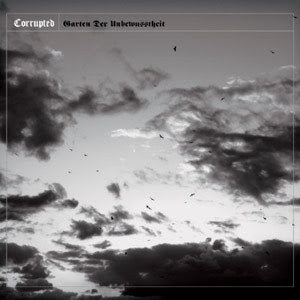
CORRUPTED "GARTEN DER UNBEWUSSTHEIT" (Nostalgia Blackrain)

As a genre, doom metal is perhaps more prone to stagnancy than others; there's only so slowly you can play before what you're doing becomes formless. Likewise there's only so far you can downtune the guitars and retain any attempt at clarity. The worst doom metal bands bludgeon away lifelessly at two or three (or sixteen, it doesn't matter) chromatic power chords and call it artistic extremity and gravitational rejection, forwarding the notion that brutality for its own sake is enough to merit consideration in a field already drowning in merciless practitioners. The best doom metal bands escape this constraint and actively work against it, sculpting towering works of void and emotional devastation that harrow listeners and seem to carve chunks out of the sky. Units like Worship take anxiety and fear to suicidal levels of depseration; Khanate chooses to explore the ever-increasing feelings of isolation that result from hyper intelligence and immersion in the seas of modern culture; Bunkur ally themselves with staunch minimalism and seek to craft the most militant, punishing pools of sludge laid to tape; Loss plumbs the depths of self-loathing to a point where the only way out is to drag a razor blade across the wrists and say a prayer in the dark. And then there's Japan's Corrupted, a band that by this point is really doom by past reflection only. Across a wealth of releases, Corrupted have taken a simplistic, crushing, and ritualistic take on doom metal to its outermost reaches, turning in record after record of agonized cross-cultural disgust and self-reflection, filtering their music through an ever-more melancholic lens to arrive at the mountain of sadness that is "Garten der Unbewusstheit."
Roughly translated as "Garden of Unconsciousness," Corrupted turn in a strangely docile and mournful effort owing more to Mogwai and Isis than any association with doom. The closest genre touchstone at this point would be early Thergothon, but Corrupted's sound is so much more powerful than any sort of comparison at all to contemporaries is going to fall flat. Made up of two epic 30 minute interpolations of the same song and a short acoustic interlude to separate them, "Garten der Unbewusstheit" is a sour field of rotted delight, yielding a sickening stench of sweetness wasting away in the sunlight.
"Garten" leads the record and immediately sets the tone with severely languid clean guitar lines imbued with a deep sense of regret and restraint. The tone is plodding and tightly controlled, melodies repeated and cycled through over and over. Across its thirty minutes "Garten" builds up and achieves an exhausting intensity as well as a fragile sort of beauty (these are probably the most unabashedly lovely songs Corrupted have ever written) that weeps from within, growing louder and more dense as it exhausts itself but never fully opening up and giving itself over to the mammoth swathes of belching distortion that Corrupted are so famous for. This is sadness as an eternal quality, an illustration of personal defeat and resignation that uses constancy and repetition to pull you further into a sense of despair.
"Against the Darkest Days" is the interlude piece, a somber bit of acoustic guitar that echoes some of the melodies and form and certainly most of the ideas behind "Garten"; as a reprieve it works wonderfully, drawing you in with its gentle affectations even as it readies the razorblades and lights the candles.
The record closes off with "Gekkou no Daichi," a deeper exploration of all the musical themes introduced in "Garten" rendered more black and vilified. "Gekkou no Daichi" reeks of venom and sorrow, its head held low to the ground as its tears stain the earth beneath. Ruin, emptiness, and the destruction of sense of self all come across in waves as the track rolls over you, the cavernous vocals shredding away over the bleeding guitar work and measured drumming. Everything here is let loose. Speed is glacial, guitars are pulsing, seething and beyond monstrous. Bass tones here are sedentary, barely moving but turning all beneath to quivering acquiescence. Almost every line ends in wafting feedback, screaming out yearning and horror as the tendrils of sound reach out to caress the face of elegance. This is easily one of the most powerful and accomplished Corrupted pieces i've heard; the psychedelic flourishes and the embrace of texture through repetition create a composition of near infinite depth, clutching you close and dragging you ever deeper into the recesses of endless self-examination and true personal rejection. The whole record dares us to forget, forcing us to own up to mistakes and relive them in hypershades of grey and black. "Garten der Unbewusstheit" is failure reflected outward, a requiem for all that we held dear, a focus on existential angst and the pervasive nothingness hidden in the corners of our lives.
It took several years for Corrupted to arrive at this point, but it's an awesome step forward for a band that started out so simply. Japanese bands are unique in that they devour virtually every sound from every culture they love and manage to transform it into something entirely their own, often surpassing the source material. I think the United States has some serious contributors as far as artistic doom metal is concerned, but there's nothing here quite so all-encompassing as Corrupted's "Garten der Unbewusstheit." We'll be playing catch-up for years after this one, and by that point Corrupted will have probably already vanished even further down the horizon. Fucking massive, a superlative effort by any measure, and a major statement for doom metal of any sort.

Friday, August 26, 2011

AIDAN BAKER "NOISE OF SILENCE" (Essence Music)

Originally released by Hyperblasted Recordings in 2007, now re-released by Essence Music. One of Baker's more inspired solo outings, consisting of one single piece of uber-drone constructed of thick pulsing cloud-tones and densely layered strains of sludged out feedback scattered beneath an almost ever present wash of altered vocals. This veers towards the heavier end of Baker's ambient output, very easily recalling his "Exoskeleton Heart" album for Crucial Bliss as well as Nadja's more formless voiding moments, blurring the line between Baker's two aesthetics even more than they already have been. With Nadja growing more and more spacious with each release and Baker's personal explorations growing darker and more aggressive, one wonders when it will finally all fall under the Nadja blanket (the recent release of the "Beta Betes" LP on Beta-Lactam, in which Nadja "covers" some of Aidan Baker's songs, does little to help with any sort of distinction.) Nitpicking aside, "Noise of Silence" is a well-crafted example of Baker at his personal best, crafting a frightening, narrow world out of obliques and atmospheres more often found in body horror films than in ambient music.
While much of Baker's work does achieve a pleasant floating quality, his is truly an ambience of anxiety. There is always an underlying tension in the tones, a strain that never quite surfaces but always makes itself known. It's eerie and unsettling much of the time, resulting in difficult extended pieces that put the listener on edge as much as they relax. Listening to this sort of stuff in the dark is sure to inspire a certain level of fucked-upedness in your dreams provided you can eve get to sleep; this isn't the passive sort of ambient used for narcoleptic endeavour. This is music that reduces you to insomnia, infected with a darkness and venom that poisons any chance for repose with a wilting discomfort. Like Lull or Lustmord, this is precision drone with nefarious intent, insistent on exploring oceanic realms of drift, going ever deeper into zones forbidden and weeping with otherworldy pressures and presences. The landscapes become mountainous, threatening oblivion even as they beckon and tempt with terrain unknown.
As "Noise of Silences" continues across its reach, the piece begins to achieve an almost industrial level of immersion, with all manner of klangs and hisses rising out of the ether. It's measured brutality, and the size of it becomes almost overwhelming. The idea of body-horror surfaces here again, with Baker transforming a promise of the gentle and graceful into some towering monolith of hateful, roaring machine-driven terror. That the piece contorts itself and becomes such a weapon, almost from the inside out, aligns Baker with a near Cronenbergian philosophy of being in the world, that everything we are is really a mysterious and terrifying unknown, that the secrets our bodies hide from us could crack us apart at any moment and claw their ways through our fragile, rubbery skin. Pure unbridled electricity and raw power course through "Noise of Silence," creating a suffocating atmosphere of dread and demanding deference to its true spaciousness.
When at last the work begins to calm itself and retreat, Baker throws in a repeated series of samples taken from a suffering person, persecuted by society and perhaps plagued by some sort of mental illness. The voice bemoans the "loudness of silence" and repeatedly confirms that he was driven to think of suicide; the piece comes to a close on this voice's confession that sometimes the silence becomes so much that you just want to drive your car right into a tree and end it. It's an elegant and chilling way to close out a record that so carefully and powerfully establishes the terrifying qualities of raging sound; that this could go on and on without reprieve, flaying us ever closer to the bone and to our beings, suggests something close to an existential apocalypse that our minds are unable to comprehend.
Essence Music's deluxe version of this record (which, as usual, is breathtakingly gorgeous and a true collector's artifact) includes a bonus CDr of early Aidan Baker demo material culled from the 1991-1999 period. The eight selections range widely in tone, some treading close to the overblown industrial horror heard here and some veering closer to a more intimate style of audio confessional. The most successful are those that contrast most heavily to "Noise of Silence" itself; both "West of the Sun" and "Clinging" show a more tender hand, utilizing slightly amplified acoustic guitars and sampler/sequencing pedals to great, melancholy, and distressing effect. The same sense of unease is present but tempered by a warmth that "Noise of Silence" largely eschews. Taken together the two records form a lovely contrast as well as make a powerful statement regarding Baker's mastery of mood; "Godless" and "Misunderstanding" both drench the ears with wintry, screaming guitars but manage to come off as inviting, like a cloak of sunlight between two hulking glaciers. Far from being a toss-off (which would be easy considering Baker's extensive discography), the demos disc is a carefully assembled, symbiotic companion to the rework of "Noise of Silence" that plays off the strengths of the former while still delivering its own unique display of aesthetic. If you were to hear only one Aidan Baker record your whole life, this one would be in the running for most essential. Highest possible recommendation.

Saturday, August 20, 2011

KADOTUS "VAIENNEET TEMPPELIT" (Werewolf Records)

Another unexpected return from a black metal entity that more or less disappeared. Kadotus' last full length, "Seven Glorifications of Evil," was an absolutely astonishing slab of hyper melodic, ultra-raw neoclassicist black metal, revering the old masters while flying a middle finger towards the idea of black metal's growth and future. Released in 2003, "Seven Glorifications..." caused little fervor amongst the community at large; few save the true diehards recognized the strength and vision boiling beneath the baroque riffing and abrasive atmospheres. Afterwards Kadotus more or less went deep underground, releasing the occasional split or seven inch but never resurfacing with a sophomore effort, content to let the years (and a wave of pointless black metal understudys) wash away behind them, readying the strike.
That deathblow comes in the form of "Vaienneet Temmpelit," a total reinvention of the Kadotus sound and a retreat into further reaches of primeval black metal, finding more in common with the early ragged works of Bathory and Venom than the structured melodicism of contemporaries like Gorgoroth and Satanic Warmaster (whose label Kadotus calls home.) While initially the album seems to abandon all the things that made "Seven Glorification of Evil" so fucking masterful, "Vaienneet Temppelit" is just a slightly different exploration of black metal's fiery history, pillaging the sounds most associated with chainsaw violence and blackened birth to form a backwards-looking retreat into unbridled chromaticism and thrashtastic death-metal tremelo figures. This is the most atonal Kadotus have ever been, with most songs draping themselves in occultish half-time groove-riffing not unlike Teitanblood or Vasaeleth. Production is similarly reductionist, the whole affair sounding dust-drenched and buried beneath layers of grime and cobwebbed murk. As the record progresses the intensity becomes almost narcoleptic, lending an air of mesmerization to the proceedings that perfectly suits the sacrificial aura surrounding the magicks contained within. Kadotus are one of few truly Satanic BM units, crafting hymns to worship and praise as much as they are writing songs to commit to record. "Vaienneet Temppelit" feels suitably frightening; despite the somewhat comical cover art the album still comes across as being something from another system of beliefs, touching on the weird vibes you get from handling a GBK album or one of Burzum's prison recordings. There's a darkness present here, and it's slightly unnerving.
While i would have rather seen Kadotus continue down the melodic path they began to tred on "Seven Glorifications..." and the equally excellent "Twilight's Depths" EP, "Vaienneet Tempellit" is a worthy follow-up in crafting a legacy of evil from one of modern black metal's most promising projects. The purity present in the recordings summons up the spirit of rancid classical black metal, baring teeth and going straight for the throat as if there was nothing more important than destruction and the gospel of the horns. This is church-burning music, a rallying cry for those that hold the fires of rebellion deep in their hearts. Christianity and monotheism are intrusive forces not suitable to the world as is, and Kadotus are out to wage bloody, death-drenched war on all those who falsely believe. A true force of black metal fury for dimming times. Recommended.

Tuesday, August 16, 2011

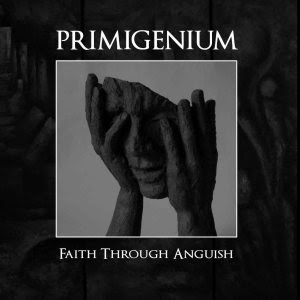
PRIMIGENIUM "FAITH THROUGH ANGUISH" (BlackSeed Productions)

Totally surprising return for Primigenium, after nine years of dormancy. Their last effort was the Drakkar-released "Intolerance" in 2002, a hateful slab of borderline war metal that wore the masques of black deep into the caves of obscurity, courting indifference from the vast majority of critics and even some open hostility from listeners. Often accused of a serious lack of creativity, Primigenium have refused to eschew black metal classicism since their inception, never veering far from the template established by Mayhem (easily the major influence) and flirting with an ideology that embraces serious anti-semitic overtones tempered with a touch of suicidal anxiety and frustration. "Faith Through Anguish" sees the band reduced to lone member Smaug and ushers in a deeper influence of depressive aesthetics, with six tracks that reference his work in side project Shroud as well as the obvious nod to black metal's violent beginnings. The result is the band's strongest album to date and a seriously welcome comeback from one of Spain's few contributors to the black metal genre.
Across the album's 42 minute runtime, Smaug displays an impressive artistic obstinancy that chooses to pretend the last 15 years or so never happened. For Primigenium black metal begins with Mayhem and ends with Striid, staring through a five year window that reduces the idea of growth to a whisper on a horizon miles and miles away, separated from modernity by an ocean of tradition. Every song trades in simple melodic riffs anchored by severe double bass heroics, achieving a hypnotic repetition that bestows an impressive sense of severity. The guitar tone and heavily muted phrasing recalls Metallica's on "Ride The Lightning" while the speed is all "Deathcrush"-era Mayhem. The aggressively chaotic nature of this sound gives "Faith Through Anguish" a heaviness not usually found in black metal; there's an intensity running throughout that reminds of power violence or completely unhinged thrash metal by way of early '90's Ministry. It sounds weird but it makes sense when all the parts add up: it's violent, oppressive and freezing cold. Vocals are equally weird, veering between haunted caterwauling, choking graverasps, death metal low-end extremism and majestic actual singing. Normally such a varied approach yields a schizophrenic pointlessness but here it works, recalling the low/high effect that characterized early Deicide.
Many Spain-area black metal bands (Grim Funeral, Defuntos, etc.) fall back on extreme dissonance to give their music an entirely separated, almost-nauseous atmosphere and Primigenium are no different. The crushing opening riff in "Third Floor" is nearly transformed by the dissonant inflection upon it's reemergence towards the song's end, making everything feel far more off-kilter and frenzied than it really is. So too the main riffs in "Faith Through Anguish I: The Abysses," where the chord voicings veer towards the atonal, creating complex finger-benders worthy of Dave Mustaine's most composed outings. For all that, though, Primigenium can't abandon the sheer rock majesty of cookie-cutter black metal, and the endlessly furious buzzsaw riffing and wintry ambience evoke the very best of the old masters. Primigenium isn't afraid to reach even further back into metal's bag of tricks, either: the guitar solo that takes you out of "The Abysses" is sheer melodic neo-classicism, soaring and moon-minded in its singular quest for sky-cleaving.
For a band that had all but disappeared, this is a phenomenal effort, and easily one of the most enjoyable no-frills black metal recordings i've heard this year. There's no posturing, no real display of influence other than the genre template (albeit with a few classical garnishes), and no fucking around. The incorporation of more suicidal textures lends a heft to the sound and atmosphere that wasn't there on previous efforts; here those weeping melodies and sorrowful, elongated structures serve as a portal to take the listener ever-deeper into war-ravaged realms of mental strife and ideological stratification. By invoking history and embracing primitivism, Primigenium have created an album that sounds like it belongs in the now. Their contemporaries, past or present, have much to meet in terms of artistic achievement if they hope to even approach the grandeur of "Faith Through Anguish"; by the time Smaug screams "Fuck you all" towards the end of the record you can't help but feel it's directed at all those who left Primigenium, as well as the pure black metal they proffered, behind. Such banal dismissal usually rings hollow but here it's warranted, justified, and venomous. While it's something of a surprise that Primigenium are still around, "Faith Through Anguish" demonstrates the strength of black metal as a genre. If simple regurgitations garner critical accolades, the real thing should pretty much lay the current black metal landscape to waste. Be wary of the pretenders.


Thursday, August 11, 2011

DISMA "TOWARDS THE MEGALITH" (Profound Lore)

Guttural cthonic immersion dressed up in the trappings of classic era death metal from Disma, one of the best examples of death metal revision that i've heard. Everything about this is cloaked in the atmosphere of the early '90's, from the gorgeously Satanic terror fantasy of the cover artwork (which is glorious and must truly be seen spread across the disc's six panels) to the muted production and murky bludgeoning audial trauma spread across the album's eight tracks. Opening this thing up, it even smelled like all my tapes did back in the '90's, that undefinable sort of "book" odor that reminds of being 12 years old and cracking a Napalm Death tape open for the first time. This is a pure act of reverence as well as a revitalization of extreme music, veering away from pointless complexity and getting back to the frightening basics of death metal.
While Disma doesn't shy away from tempo changes, the majority of "Towards the Megalith" basks in a sludgy, sloping gate, a race forward in half time driven by relentless, punishing double bass repetition and thick distorted bass throbs. Guitars are mudboxes, tuned so low as to be wiping themselves across the fretboards in hobbling resonance. It's a sound that hearkens back to both Entombed and Morbid Angel at their respective bests, a bottomless grinding hole of shredded amp crust-overs and boiling tar mixed together for maximum yield. Disma strengthens their connection to death metal's glorious past even further with Craig Pillard's vocal performance, a tortured descent into the further reaches of untampered human low end. There are no vocal effects or drum triggers to be found here-this is pure and raw, coming at your ears like a chainsaw gutsfuck of hulking, bloody proportion. Pillard's work with Incantation was always phenomenal, and here he guides Disma to the sludge-minded peaks that Incantation was headed towards. The refusal of complexity lends an immediacy (and a weird approachability) that a lot of modern death metal simply lacks. There's no pretension or aura of infallible musicianship obscuring Disma's intent; they're simply out to rip your fucking face off. A million hyper-complicated unplayable riffs don't mean shit when they're thrown against one raging death metal groove; the hypnotic zone-out potential of death metal classicism wins out everytime.
But Disma aren't just some nostalgic throwback. They're a band existing between the lines of defined extremity, furthering a sound that never should have really stagnated. For whatever reason, death metal as movement pretty much disappeared by the mid '90's. Extremity without image (the sort that black metal began to unwittingly cultivate for itself) became borderline ridiculous. Now the curtains have been drawn back to reveal throngs of fans still desperate for that classic sound, the sort delivered by Carcass, Disincarnate, early Deicide and more. Modern death metal, especially of this sort (as well as the style done by bands like Vastum, Encoffination and Coffins) is less revisionism than it is picking up where something left off far too prematurely, a taking up of the mantle to continue the mission began so long ago. You could make the argument that death metal reached its end by simply having nowhere left to go-no one will ever make an album as complex and raging as Deicide's "Legion" and it'd be hard to surpass the majestic elegance of Carcass' "Swansong"-but it could also be argued that the formula had been perfected, and what was left was for interesting and creative projects to come in and work within the templates to push the genre as a whole forward. This is what Disma does. "Towards the Megalith" is that superlative record that both references and exceeds its pedigree, a work of suffocating density and vitriolic aggression rendered in classicist terms. It's importance can't be understated, and it's status as a death metal benchmark is more than assured. Recommended.